Pruning and deadwood
Tree trimming in Placerville
Tree trimming is the maintenance side of tree work: pruning deadwood out of the canopy, raising and thinning branches, and clearing limbs off the roof and the power lines before they fail on their own. Call the number on this page to reach a licensed, insured tree service that works El Dorado County. Done right, trimming keeps a tree healthy and safe and heads off the expensive emergency later. Done wrong, it ruins the tree. This page explains the difference.
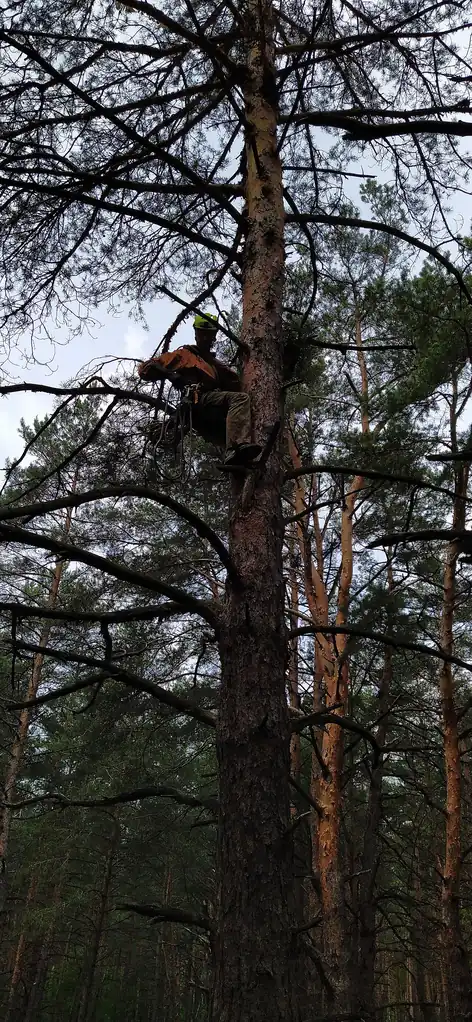
What trimming actually covers
Trimming is not one job, it is a handful of related jobs, and a good crew will tell you which your tree needs rather than just cutting.
Deadwood removal. Every mature tree carries some dead branches, and they are the ones that break loose in a wind or a snow load and come down on whatever is below, a roof, a car, a walkway, a person. Pulling the deadwood out of a canopy is the single highest-value trim on most established trees, and it is often the whole reason to get up in a tree in the first place.
Canopy raising. Removing the lowest branches lifts the bottom of the canopy off the roof, away from the driveway, and clear of head height, which is both a convenience and, near a house, a fire-clearance issue.
Thinning. Selectively taking out crowded and crossing branches lets wind pass through the crown instead of pushing on a solid sail. A thinned tree is less likely to blow over or shed a big limb in the winter storms that come through the western county.
Clearing structures and lines. Limbs growing into the roof, rubbing the siding, or reaching toward the power lines are failures waiting to happen, and getting them cut back is cheaper than fixing what they damage.
Limbs over the roof or into the lines? Describe the tree on the phone and get it looked at.
Getting limbs off the roof and lines before they fail
The most useful trimming is the kind that removes a hazard before it becomes a claim. A limb resting on or scraping the roof works shingles loose and opens a path for water and pests, and in a storm it is the branch most likely to punch through. A branch reaching into the power lines is worse: it can pull the service off the house, arc, or start a fire, and it is not something to cut yourself with the line right there.
This is the preventive angle that makes trimming worth the money. The hazard limb you have trimmed back on a scheduled day for a modest price is the same limb that, left alone, comes down in the next storm and turns into a roof repair, an insurance call, or an after-hours emergency. Walk your property before winter and look up: anything dead, anything touching the house, anything near the lines is worth clearing while it is still a trim and not yet a failure.
Why the cuts matter
Trimming looks simple from the ground, which is exactly why so many trees get wrecked by bad cuts. A pruning cut is a wound, and where and how it is made decides whether the tree seals it over cleanly or rots from the opening. Good pruning takes a branch back to the right point so the tree can close the wound, removes no more live growth than the tree can spare, and keeps the natural shape.
The worst thing you can do to a tree is top it, meaning cut the main stems back to stubs to make it shorter. Topping is not pruning. It strips the tree of the leaves it feeds itself with, forces a burst of weak upright regrowth that is poorly attached and prone to failure, and leaves large wounds that invite decay. A topped tree is uglier, weaker, and more dangerous within a few years, and it never recovers its structure. A crew that knows what it is doing will steer you away from topping and toward proper reduction and thinning that get you the clearance you want without ruining the tree.
Timing, and a note on oaks
Most trees can be pruned at almost any time of year when there is a hazard to deal with, and a genuinely dangerous limb should never wait for a season. For routine pruning, though, timing matters, and it matters most with oaks. The general guidance in oak country is to avoid pruning oaks during the wet part of the year when possible, because fresh cuts made in wet conditions are more exposed to the fungal and insect problems that spread in that window, and to favor the drier dormant season for planned oak work. The practical version is simple: prune oaks when they are dry and dormant if you have the choice, keep the cuts clean, and do not put off a hazard limb over a timing rule. A local crew will know the right window for the tree in front of you and can advise when your oak is best pruned.
Trim now, or remove later
A lot of the tree emergencies in this county trace back to a limb or a defect that was visible and ignorable for years before it finally let go. That is the case for trimming as prevention. Keeping deadwood out of the canopy, thinning a top-heavy crown, and clearing the branches over the roof and the lines is a small recurring cost that quietly removes the failures before they happen. Skip it long enough and the bill arrives all at once, as a removal or an after-hours call. If a tree is already too far gone to save with a trim, the honest answer is removal, and the tree removal cost page covers what that runs. For most healthy trees, though, the right maintenance keeps them standing and safe for a long time.
Trimming questions
How often should trees be trimmed?
It depends on the tree, but many mature trees do well with a maintenance prune every few years, and any tree near a house is worth a look before winter for deadwood and roof clearance. Fast-growing or hazard-prone trees may want more frequent attention. A crew can set a sensible interval once they have seen what you have.
Is topping ever the right call?
Almost never. Topping strips a tree of its foliage, forces weak regrowth that is prone to breaking, and opens large wounds to decay, leaving the tree weaker and more dangerous within a few years. When a tree genuinely needs to be smaller, proper crown reduction gets you there without wrecking it. If a tree is too big for its spot to fix with pruning, removal is the honest answer.
Can you trim a branch that is touching the power line?
A branch actually touching a live power line is the utility's to handle, not a tree service. Call your electric utility, and if a line is down, arcing, or sparking, call 911. Do not try to cut it yourself and do not let anyone near it. Once the utility has cleared or de-energized the line, a crew can safely trim the branch back.
Will trimming hurt my tree?
Proper pruning helps a tree by removing deadwood and improving its structure. Bad pruning, especially topping or over-thinning, hurts it. The difference is in where and how much is cut. A crew that prunes to the right points and takes no more than the tree can spare leaves it healthier than they found it.
Do you handle removal if the tree is too far gone?
Yes. If a tree is dead, hollow, or structurally failing beyond what a trim can fix, the same crews handle removal, and clearing hazard trees is part of a defensible space plan. Trimming is for the trees worth keeping.
Get connected with a licensed local tree service.